The Art and Science of Smokehouse Flavors
In today’s food industry, flavor is everything. As consumer demand for bold, authentic tastes continues to rise, smokehouse flavors have emerged as a favorite for their deep, savory profile that evokes the tradition of wood-smoked delicacies. From savory snacks to frozen meals and even plant-based options, smokehouse flavors have become an essential part of the culinary landscape.
However, one of the biggest challenges food manufacturers face is maintaining the rich, smoky essence of these flavors, especially when they’re subjected to high heat during frying and breading processes. It’s not enough to simply add a smoke flavoring; it needs to withstand intense cooking methods without losing its character or becoming overpowered by other ingredients.
That’s where Trilogy Flavors comes in. As a flavor company for food manufacturers, Trilogy’s team of experts specializes in crafting natural, high-quality smokehouse flavors that not only deliver that authentic, smoky taste but also endure through the rigors of food processing.
In this article, we’ll explore the science behind creating smokehouse flavors that last through frying and breading, and how Trilogy’s innovative solutions are making it possible to maintain that perfect smoky flavor, every time.
Understanding Smokehouse Flavors
Smokehouse flavors bring a distinctive, wood-infused depth to foods, making them an undeniable favorite in the culinary world. But what exactly makes a flavor “smokehouse”?
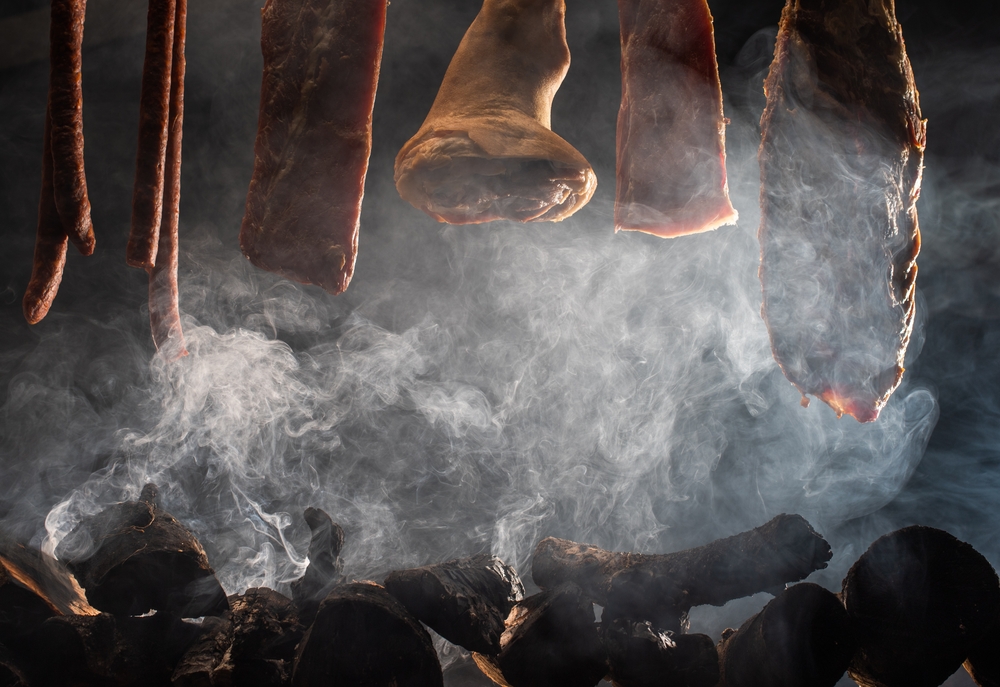
At its core, a smokehouse flavor is designed to replicate the taste of food that’s been smoked over wood, such as hickory, mesquite, or applewood. These flavors are created by capturing the complex compounds released during the smoking process and infusing them into food.
Defining Smokehouse Flavors
A true smokehouse flavor is more than just the taste of smoke. It’s a rich, multi-layered profile that balances the smokiness with a variety of other savory notes, like wood, earthiness, and a hint of sweetness or spice.
Smokehouse flavors are typically categorized by the type of wood used in the smoking process—each wood imparts a different character to the flavor. For example, hickory smoke is bold and intense, while applewood offers a milder, subtly sweet profile.
How They’re Made
Traditionally, smokehouse flavors were created by physically smoking foods over wood, allowing the smoke to infuse the meat, vegetables, or grains. But in modern food manufacturing, smokehouse flavors are usually achieved through a combination of natural smoke extracts, liquid smoke, and flavor-enhancing compounds.
These ingredients capture the essence of wood smoke, preserving its complexity while allowing for precise control over flavor strength and consistency.
Applications
Smokehouse flavors are incredibly versatile and can be applied to a wide range of food products. From smoked meats and poultry to snacks like chips and popcorn, the smoky profile adds a layer of indulgence that consumers crave.
In recent years, these flavors have found their way into plant-based alternatives as well, offering a satisfying smokiness to meatless burgers, sausages, and even vegan cheeses. The adaptability of smokehouse flavors makes them an essential ingredient for food manufacturers looking to meet the growing demand for bold, smoky tastes in their products.
The Science Behind Flavor Retention in Frying and Breading
While creating a robust smokehouse flavor is an art, ensuring it survives through the frying and breading process is where the science comes in. When foods are battered, breaded, and fried, the cooking process can have a significant impact on the intensity and integrity of the flavors.
High heat, oil absorption, and the presence of flour and batter can all work against the preservation of that authentic smoky taste. Understanding these challenges is key to creating smokehouse flavors that not only shine before cooking, but remain strong after.
Flavor Loss During Frying
When food is fried, the high heat can cause volatile compounds in smokehouse flavors to break down or evaporate. Smoke flavor molecules, which are naturally delicate, are particularly susceptible to heat, often resulting in a loss of flavor intensity or a change in character.
The longer the frying time, the greater the potential for the smoky flavor to dissipate, leaving the food tasting bland or overly oily.
Additionally, the oil itself can dilute the smokehouse flavor, especially if the oil isn’t infused with the right flavor compounds or if it’s reused multiple times during production. As food absorbs oil during frying, the smoky profile can become overshadowed by the greasy, fried notes, making it harder for the original flavor to shine through.
Breading Challenges
Breading poses a unique challenge in flavor retention. The flour or batter used to coat food can create a barrier that prevents the smokehouse flavor from properly infusing the product.
While breading provides a crispy texture that many consumers love; it can also trap moisture inside the food, diluting the intensity of the smoke flavor during cooking. In some cases, the breading itself may absorb too much of the seasoning, weakening the overall flavor profile.
Moreover, breaded products are often deep-fried at high temperatures, further complicating flavor retention. The interaction between the smoke flavor, breading, and heat can sometimes lead to uneven seasoning, where certain bites may have a stronger smoky taste than others.
Why Timing and Temperature Matter
Achieving the perfect smokehouse flavor that lasts through frying and breading isn’t just about the right ingredients—it’s also about precise control over cooking conditions. Temperature plays a crucial role in flavor preservation. Too high a temperature, and the smokehouse flavors may burn off; too low, and they might not fully infuse the product.
This is where Trilogy Flavors’ expertise comes in. By understanding the intricate relationship between timing, temperature, and ingredient interactions, Trilogy’s team of flavor scientists is able to create solutions that allow smokehouse flavors to hold up under the rigors of frying and breading, ensuring a consistent, rich taste in every bite.
How Trilogy Flavors Ensures Smokehouse Flavors Stay Strong
Creating smokehouse flavors that can endure the intense heat and complex chemistry of frying and breading takes more than just flavor creativity—it takes scientific precision. At Trilogy Flavors, that’s exactly what their scientists specialize in: engineering flavor solutions that perform reliably, even in the most demanding food manufacturing conditions.
Cutting-Edge Techniques for Flavor Stability
Trilogy’s R&D team approaches flavor creation with both artistry and chemistry in mind. To ensure smokehouse flavors remain bold and authentic after frying, their scientists focus on encapsulation and formulation stability—two key strategies for flavor protection.
Encapsulation involves surrounding the flavor compounds with a protective barrier, preventing them from breaking down under high heat or being lost in oil. This method not only preserves the integrity of the smokehouse flavor but also ensures it’s released at the right moment during cooking or consumption, enhancing aroma and taste when it matters most.
Formulation stability, on the other hand, ensures that the flavor compounds interact harmoniously with other ingredients in batters, breadings, and seasonings. Trilogy’s team carefully tailors each smokehouse flavor to the specific fat, moisture, and heat profiles of a given product application—whether it’s a fried chicken strip, breaded snack, or plant-based nugget.
Liquid Seasonings and Flavor Enhancers
Trilogy’s liquid seasonings play a vital role in intensifying and locking in smoky notes. These concentrated, easy-to-blend solutions are designed to integrate seamlessly into marinades, coatings, or pre-fry preparations. Their balanced formulation allows the smokehouse flavor to stay vibrant without overpowering other key ingredients.
Meanwhile, Trilogy’s natural flavor enhancers are formulated to boost umami and depth—complementing smoke profiles so they remain full-bodied and authentic even after high-temperature processing. Together, these technologies allow food manufacturers to maintain a consistent, craveable smokehouse flavor across multiple production runs.
The Role of Reaction Flavors
Reaction flavors are another specialty at Trilogy Flavors. By replicating the Maillard reaction—the same browning process that gives grilled and roasted foods their characteristic flavor—Trilogy’s scientists craft smokehouse notes that are both robust and resilient. These reaction flavors are designed to withstand heat and oil exposure, reinforcing smoky depth throughout the cooking process while maintaining that satisfying “fresh-off-the-smoker” taste.
The result? Smokehouse flavors that stand up to the demands of industrial frying and breading without losing their charm—consistent, authentic, and unmistakably delicious.
The Importance of Natural Ingredients for Long-Lasting Flavor
When it comes to smokehouse flavors, authenticity matters. Consumers today are not only drawn to bold smoky profiles—they’re also seeking products made with natural ingredients they can trust. For food manufacturers, this means the challenge goes beyond just flavor impact; it’s about creating smokehouse flavors that taste genuine and remain stable throughout processing, without relying on artificial additives.
Natural vs. Synthetic: The Flavor Longevity Advantage
Synthetic smoke flavors may offer intensity at first bite, but they often lack depth and fade quickly under high-heat conditions. Natural smokehouse flavors, on the other hand, are derived from real wood smoke condensates and other natural sources, capturing the complex balance of phenols, carbonyls, and organic acids that give smoke its layered, enduring taste.
Because these compounds mirror the chemistry of actual wood smoking, they bond more effectively within the food matrix. This results in smokehouse flavors that hold their authenticity longer—even after frying, breading, or freezing. It’s a difference consumers can taste: a cleaner, rounder smoky note that feels more “real” than manufactured.
How Trilogy Flavors Elevates Natural Formulations
At Trilogy Flavors, natural flavor creation is not a trend—it’s a foundation. Their scientists craft smokehouse flavors using naturally derived ingredients, ensuring both stability and sensory richness. Each formulation is engineered to perform consistently across product types, maintaining the perfect balance between flavor potency and processing resilience.
By focusing on natural compounds, Trilogy can replicate the complexity of traditional smoking while controlling variables that affect performance, like heat volatility and ingredient interaction. The result is a smokehouse flavor that endures—flavorful, authentic, and clean-label friendly.
Flavor Consistency Across Applications
For food manufacturers, consistency is key. Whether producing breaded chicken, meat alternatives, or snack coatings, maintaining a uniform smokehouse flavor across batches is critical for brand identity and consumer satisfaction. Trilogy’s natural formulations ensure this consistency, offering a reliable flavor profile that doesn’t waver from production line to finished product.
It’s this commitment to both science and sensory experience that enables Trilogy Flavors to help manufacturers achieve the best of both worlds: long-lasting, natural smokehouse flavors that consumers love and brands can trust.
Additional reading: The Rise of Smoke and Wood Flavors: Shaping Culinary Trends in the Food Industry
Case Studies: Success Stories of Smokehouse Flavors in Food Manufacturing
Nothing showcases the power of science-backed flavor innovation better than real-world success stories. Trilogy Flavors has helped numerous food manufacturers achieve that perfect smoky balance—creating products that deliver a consistent, crave-worthy taste, even after frying and breading. Each success highlights how precision flavor formulation can transform both product performance and consumer satisfaction.
Let’s look at a few hypothetical examples.
Example 1: Crispy, Smoky Poultry That Delivers Every Time
A major frozen food producer approaches Trilogy with a familiar challenge: their breaded chicken products lost most of their smoky flavor once fried and frozen. The initial formulation couldn’t withstand the intense heat or maintain aroma after packaging.
Trilogy’s flavor scientists will reformulate the product using a combination of reaction-based smokehouse flavor and a heat-stable liquid seasoning. The result will be remarkable—a product that maintains its rich, hickory-smoked aroma and balanced savory notes, even after multiple freeze-thaw cycles. Consumers will report a noticeable improvement in flavor intensity and “fresh-grilled” authenticity, while the manufacturer will gain a more consistent, reliable production process.

Example 2: Elevating Plant-Based BBQ Alternatives
As the plant-based sector expanded, a leading meat alternative brand seeks a partnership with Trilogy to infuse their vegan “pulled pork” and “smoked sausage” lines with authentic smokehouse depth. The goal is clear: create a smoky, savory flavor profile that could survive extrusion, frying, and reheating—all while maintaining a clean-label status.
Trilogy’s natural flavor experts will develop a custom smokehouse formulation derived from real wood smoke condensate, blended with natural umami enhancers for depth. Even after high-temperature extrusion, the product will retain its layered, mesquite-style flavor and deliver that signature “off-the-smoker” aroma consumers associate with traditional BBQ.
Example 3: Snack Coatings That Stay Smoky and Balanced
A snack manufacturer wants to create a new line of smoked chip coatings that hold up through baking and frying without tasting burnt or artificial. Using Trilogy’s encapsulated smokehouse flavor technology, they will achieve precisely that. The protective encapsulation allows the smoky notes to bloom during baking, enhancing aroma and taste without losing their character to heat.
The result is a perfectly balanced smoky chip that stands out in a crowded market—proving that even in light, crispy snacks, the right formulation can make all the difference.
Across each of these hypothetical projects, one thing remains consistent: Trilogy Flavors’ ability to tailor smokehouse solutions that perform under pressure. Their deep understanding of flavor chemistry and processing dynamics allows food manufacturers to achieve results that are not just good — but reliably exceptional.
For additional insights into smoke flavor trends and market performance, refer to the IMARC Group’s Smoke Flavour Market Report
Conclusion: The Future of Smokehouse Flavors in Food Manufacturing
As consumer tastes evolve, so does the science of flavor. Smokehouse flavors are no longer confined to the smoker—they’ve become a versatile, high-performing solution for modern food manufacturing. The challenge lies not just in creating that signature smoky richness, but in ensuring it lasts through every stage of production, from frying to freezing.
Trilogy Flavors continues to lead that evolution. With their expertise in natural flavor formulations, reaction flavors, and encapsulation technology, they help food manufacturers capture the authentic essence of wood smoke—and make it last. Whether it’s a crispy breaded chicken, a smoky plant-based protein, or a snack that surprises the senses, Trilogy’s solutions are crafted to perform consistently and taste extraordinary.
Because for Trilogy Flavors, flavor creation isn’t just part of the process—it’s at the heart of what they do.
If you’re ready to explore smokehouse flavors that withstand frying, breading, and beyond, partner with the flavor company that understands how to make great flavor last.
Visit Trilogy Flavors to connect with their team of experts and discover the perfect smokehouse solution for your next food innovation.